
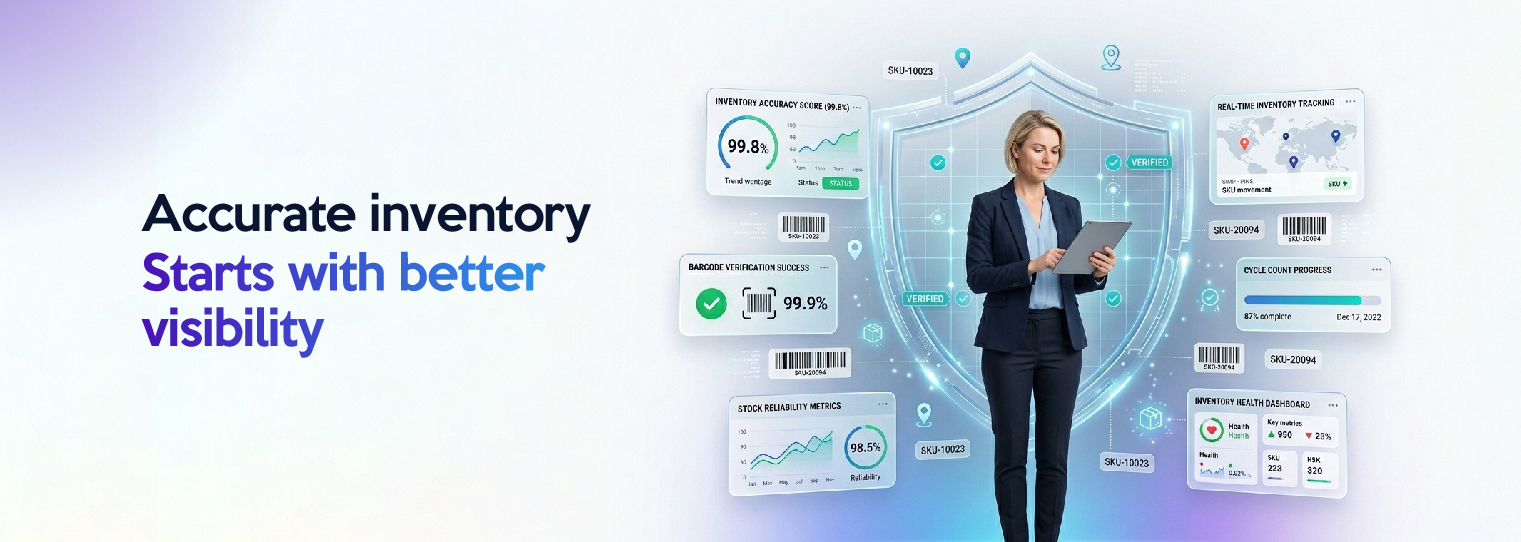
Inventory accuracy is one of the most important indicators of operational efficiency. When inventory records accurately reflect actual stock levels, businesses can fulfill orders confidently, make informed purchasing decisions, and maintain smooth warehouse operations. However, when inventory data becomes unreliable, the consequences often extend across the entire organization.
A missing product may result in a delayed shipment. An inaccurate stock count can trigger unnecessary purchasing. A warehouse discrepancy may affect customer satisfaction, profitability, and operational planning.
For many growing businesses, inventory errors are not isolated incidents. They become recurring operational challenges that consume time, increase costs, and limit visibility. The good news is that most inventory errors are preventable.
By understanding the root causes of inventory inaccuracies and implementing stronger inventory management practices, businesses can significantly improve inventory accuracy while reducing operational disruptions.
Inventory accuracy is not simply about counting products correctly. It is about creating reliable processes that support better business decisions.
01 · Why it mattersWhy inventory accuracy matters
Inventory affects nearly every department within a business.
Sales teams depend on accurate stock information before committing to customers. Purchasing teams rely on inventory data when planning replenishment. Warehouse teams need visibility into available inventory and storage locations. Finance teams depend on inventory records for valuation and reporting.
When inventory data is inaccurate, businesses often experience:
- Stockouts
- Overstocking
- Fulfillment delays
- Purchasing mistakes
- Customer dissatisfaction
- Increased operational costs
These issues can impact profitability as well as customer trust. Accurate inventory information creates the foundation for efficient operations and informed decision-making.
The larger the inventory operation becomes, the more important inventory accuracy becomes.
02 · Common causesCommon causes of inventory errors
Before businesses can improve inventory accuracy, they must understand what causes inventory discrepancies.
Manual data entry mistakes
Manual inventory updates remain one of the most common sources of inventory errors. Employees may:
- Enter incorrect quantities
- Update the wrong products
- Forget to record inventory movements
- Create duplicate records
Even small mistakes can create significant discrepancies over time.
Receiving errors
Inventory inaccuracies often begin when products enter the warehouse. Common receiving mistakes include:
- Incorrect quantity verification
- Misidentified products
- Missing inventory records
- Data entry errors
If inventory is recorded incorrectly at the receiving stage, those inaccuracies often continue throughout the inventory lifecycle.
Picking and fulfillment errors
Order fulfillment activities create frequent opportunities for inventory discrepancies. Examples include:
- Picking the wrong product
- Recording incorrect quantities
- Failing to update inventory after shipment
These issues affect both inventory accuracy and customer satisfaction.
Inventory location problems
Products stored in incorrect locations often become difficult to find. This can create situations where inventory exists physically but appears unavailable within the system.
Lack of standardized processes
Inconsistent inventory procedures often result in different employees handling inventory activities differently. Without standardized workflows, maintaining inventory accuracy becomes significantly more difficult.
Most inventory errors originate from process failures rather than technology failures.
03 · The costThe cost of inventory errors
Inventory inaccuracies affect more than warehouse operations. They often create financial and operational consequences throughout the business.
Stockouts
Inaccurate inventory records can create false confidence regarding product availability. Businesses may continue selling products that are no longer available. The result may include:
- Lost sales
- Delayed fulfillment
- Customer frustration
Excess inventory
When inventory data is unreliable, businesses often compensate by purchasing additional stock. This can increase:
- Storage costs
- Carrying costs
- Working capital requirements
Reduced productivity
Warehouse employees often spend additional time:
- Searching for products
- Investigating discrepancies
- Correcting inventory records
These activities reduce overall operational efficiency.
Poor decision-making
Business decisions depend on reliable information. Inventory inaccuracies can negatively affect:
- Purchasing decisions
- Demand planning
- Inventory forecasting
- Financial reporting
04 · How to improveHow to improve inventory accuracy
Improving inventory accuracy requires a combination of process improvements, technology, and ongoing monitoring.
Standardize inventory procedures
Every inventory activity should follow a documented process. This includes:
- Receiving inventory
- Stock transfers
- Inventory adjustments
- Returns processing
- Order fulfillment
Standardized procedures help reduce inconsistencies and improve accountability.
Implement barcode scanning
Barcode technology significantly improves inventory accuracy. Rather than relying on manual data entry, employees can scan inventory during warehouse activities. Benefits include:
- Reduced errors
- Faster updates
- Improved traceability
- Better inventory visibility
Conduct regular cycle counts
Many businesses rely solely on annual inventory counts. However, cycle counting provides a more effective approach. Cycle counts involve counting small portions of inventory regularly throughout the year. Benefits include:
- Faster discrepancy detection
- Reduced operational disruption
- Improved inventory accuracy
Improve receiving processes
Inventory accuracy begins at receiving. Businesses should:
- Verify shipments carefully
- Confirm quantities
- Inspect products
- Record inventory immediately
Accurate receiving helps prevent downstream inventory issues.
Monitor inventory movements
Every inventory movement should be tracked and recorded. This includes:
- Transfers
- Adjustments
- Returns
- Production consumption
- Customer shipments
Visibility into inventory movement is essential for maintaining accurate records.
05 · The role of technologyThe role of technology in inventory accuracy
Technology plays a critical role in reducing inventory errors. Modern inventory systems provide greater visibility and control than manual methods.
Real-time inventory tracking
Real-time tracking ensures inventory records update immediately as inventory activities occur. This reduces delays and improves data reliability.
Inventory management software
Inventory management systems help businesses:
- Track inventory levels
- Monitor inventory movement
- Manage replenishment
- Generate inventory reports
Centralized visibility helps reduce discrepancies and improve operational control.
Warehouse management systems
Warehouse management systems improve inventory accuracy by providing:
- Location tracking
- Picking verification
- Workflow standardization
- Inventory visibility
ERP integration
When inventory systems integrate with ERP software, businesses gain visibility across:
- Inventory
- Purchasing
- Sales
- Finance
- Operations
This creates a more connected operational environment.
Technology improves inventory accuracy by reducing manual intervention and increasing visibility.
06 · Best practicesInventory accuracy best practices
Businesses that consistently maintain high inventory accuracy often follow several common practices.
Train employees consistently
Inventory accuracy depends heavily on employee execution. Training should focus on:
- Inventory procedures
- Scanning processes
- Data accuracy
- Operational accountability
Establish inventory KPIs
Performance metrics help monitor inventory accuracy over time. Important KPIs may include:
- Inventory accuracy rate
- Stock discrepancy rate
- Cycle count accuracy
- Order accuracy
Investigate discrepancies quickly
Inventory issues should be addressed immediately. Delayed investigation often makes identifying root causes more difficult.
Limit manual processes
Automation helps reduce opportunities for human error. Businesses should automate inventory updates whenever possible.
Maintain clean inventory data
Accurate product records help improve overall inventory management performance.
Inventory accuracy improves when businesses focus on prevention rather than correction.
07 · Warning signsSigns your inventory accuracy needs improvement
Certain operational indicators often signal inventory accuracy challenges. These may include:
- Frequent stockouts
- Unexpected inventory shortages
- Excess inventory levels
- High return rates
- Fulfillment errors
- Inventory adjustment increases
If these issues occur regularly, inventory processes should be reviewed and improved.
08 · FAQFrequently asked questions
What is inventory accuracy?
Inventory accuracy measures how closely recorded inventory matches actual physical inventory.
Why is inventory accuracy important?
It supports better purchasing decisions, inventory control, customer satisfaction, and financial reporting.
What causes inventory errors?
Common causes include manual data entry mistakes, receiving errors, fulfillment issues, inconsistent processes, and poor inventory visibility.
How can barcode scanning improve inventory accuracy?
Barcode scanning reduces manual entry errors and updates inventory records automatically during inventory activities.
What is cycle counting?
Cycle counting involves regularly counting portions of inventory throughout the year rather than relying solely on annual inventory audits.
Can inventory management software improve inventory accuracy?
Yes. Inventory software provides real-time visibility, automated updates, and stronger inventory control processes.
09 · ConclusionConclusion
Inventory accuracy is one of the most important factors influencing operational efficiency, customer satisfaction, and business performance.
While inventory errors may seem unavoidable, most inaccuracies result from process weaknesses that can be identified and corrected. By standardizing workflows, improving receiving procedures, implementing barcode technology, and leveraging inventory management software, businesses can significantly reduce inventory discrepancies.
As operations grow, maintaining accurate inventory records becomes increasingly important. Organizations that prioritize inventory accuracy gain stronger visibility, better control, improved decision-making, and a more reliable foundation for future growth.
The most successful businesses treat inventory accuracy as an ongoing operational discipline rather than a periodic warehouse task.
Connect inventory, warehouse operations, purchasing, and fulfillment through one centralized platform. Gain real-time inventory visibility and reduce costly inventory errors with ZeperGo.
Explore ZeperGo