
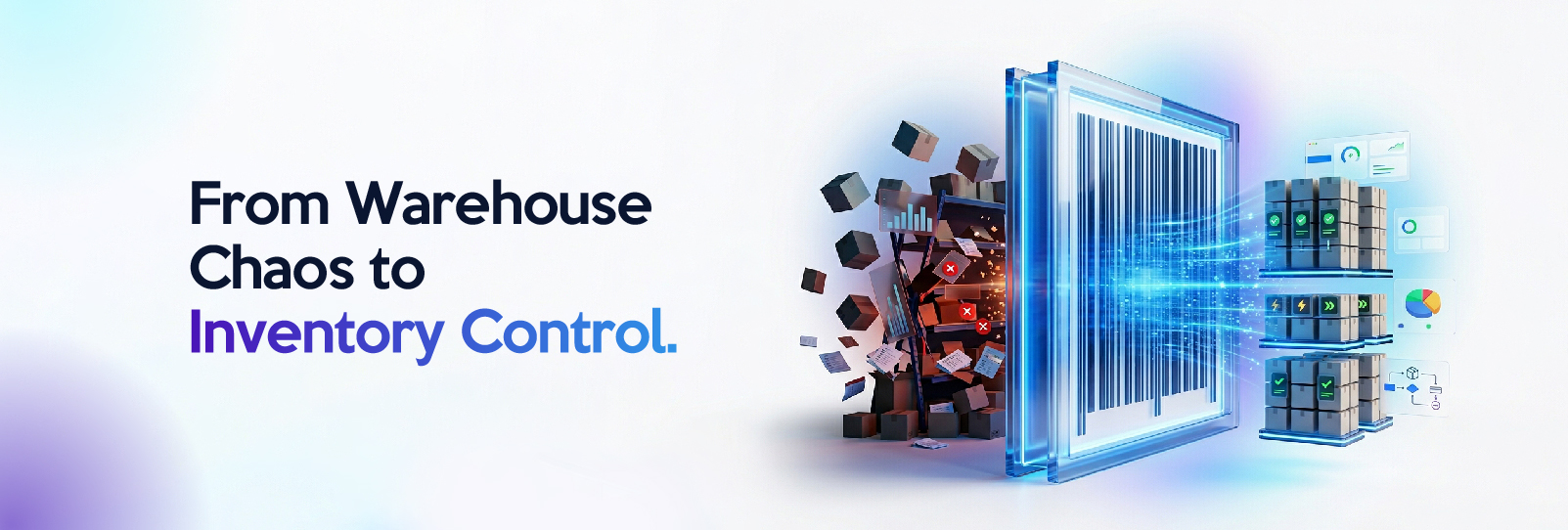
Warehouse operations depend on one critical factor: accuracy. A warehouse may have the right products, sufficient inventory, and an experienced team, but if inventory records are inaccurate, operational problems quickly follow.
Orders may be shipped incorrectly, products become difficult to locate, inventory counts become unreliable, and customer satisfaction begins to suffer. For growing businesses, these issues often become more common as inventory volumes increase.
What once worked with manual inventory tracking, spreadsheets, and paper-based processes can quickly become inefficient when warehouses manage thousands of products, multiple storage locations, and increasing order volumes.
This is where barcode scanning transforms warehouse operations. By replacing manual data entry with automated inventory capture, businesses can significantly improve inventory accuracy, reduce operational errors, and increase warehouse productivity.
Today, barcode scanning is no longer just a warehouse convenience. It has become a foundational technology for businesses seeking better inventory control and operational efficiency. The ability to capture inventory data quickly and accurately creates a stronger foundation for every warehouse process that follows.
01 · Why accuracy mattersAccuracy is a business performance metric
Warehouse accuracy affects nearly every operational function within a business. When inventory records accurately reflect physical inventory, businesses can:
- Fulfill orders faster
- Improve inventory visibility
- Reduce stock discrepancies
- Support better purchasing decisions
- Improve customer satisfaction
When warehouse accuracy declines, the consequences often spread across multiple departments. Common issues include:
- Inventory shortages
- Order fulfillment errors
- Inventory discrepancies
- Increased returns
- Lost sales opportunities
- Higher operational costs
These problems create inefficiencies that affect profitability and customer trust. Warehouse accuracy is not simply a warehouse metric. It is a business performance metric.
02 · What is barcode scanningCapturing inventory data electronically
Barcode scanning is the process of using barcode labels and scanning devices to capture inventory information electronically. Each product receives a unique barcode that contains identifying information. When employees scan the barcode, inventory information is automatically recorded within the inventory management system.
Barcode scanning can be used throughout warehouse operations, including:
- Inventory receiving
- Stock transfers
- Picking processes
- Packing activities
- Shipping workflows
- Inventory audits
- Returns processing
Rather than manually entering information, warehouse employees simply scan products during operational activities. The result is faster data capture and significantly fewer opportunities for human error.
03 · How it worksA structured, consistent process across every stage
Barcode systems create a structured and consistent process for tracking inventory movement.
Receiving inventory
The receiving process is often where inventory records are first created. When products arrive, barcode scanning allows warehouse teams to:
- Verify shipments
- Confirm quantities
- Record inventory immediately
- Update stock levels automatically
This helps establish accurate inventory records from the beginning.
Inventory storage
Once inventory is received, products are moved into storage locations. Barcode scanning records:
- Product location
- Storage movement
- Inventory status
This improves inventory visibility and product traceability.
Picking and fulfillment
Order fulfillment depends heavily on inventory accuracy. Barcode verification helps warehouse teams confirm that the correct products are picked before shipment. Benefits include:
- Fewer picking errors
- Improved order accuracy
- Faster fulfillment processes
Shipping operations
Before products leave the warehouse, barcode scanning can validate shipments and update inventory records automatically. This helps ensure inventory information remains accurate across the system.
Inventory audits
Inventory counts become faster and more accurate when employees can scan inventory directly into the system. Barcode scanning helps maintain inventory accuracy throughout the entire inventory lifecycle.
04 · Challenges solvedWhere manual processes break down
Many warehouse inefficiencies originate from manual processes. Barcode technology helps address several common operational challenges.
Inventory discrepancies
Manual inventory updates often create differences between recorded inventory and actual stock levels. Barcode scanning reduces discrepancies by eliminating much of the manual data entry process.
Misplaced inventory
Products stored incorrectly often become difficult to locate. Barcode-based location tracking improves inventory visibility and reduces search time.
Picking errors
Order picking mistakes can result in:
- Customer complaints
- Returns
- Additional shipping costs
Barcode verification helps ensure the correct products are selected.
Delayed inventory updates
Inventory information loses value when updates are delayed. Barcode scanning provides immediate updates that support real-time inventory visibility.
Time-consuming inventory counts
Manual inventory audits require significant effort. Barcode scanning accelerates inventory counting while improving accuracy.
Warehouse teams become more productive when they spend less time correcting errors and more time completing operational tasks.
05 · Impact on accuracyThe most measurable benefit of implementation
Inventory accuracy is one of the most measurable benefits of barcode implementation.
Reducing human error
Manual data entry creates opportunities for mistakes. Examples include:
- Incorrect quantities
- Wrong product numbers
- Missed inventory updates
Barcode scanning reduces these risks significantly.
Improving data consistency
Every inventory movement follows the same standardized process. This improves consistency across warehouse operations.
Supporting real-time visibility
Accurate inventory information becomes available immediately after inventory activity occurs. This helps support:
- Purchasing decisions
- Inventory planning
- Fulfillment operations
Strengthening inventory control
Businesses gain greater confidence in inventory data, enabling more effective inventory management. Accurate inventory information creates better operational decisions across the organization.
06 · Efficiency gainsReliable inventory enables faster operations
Accuracy and efficiency often go hand in hand. When inventory information is reliable, warehouse operations become more efficient.
Faster receiving processes
Barcode scanning reduces the time required to process incoming inventory. Warehouse teams can verify and record products quickly.
Improved picking productivity
Employees spend less time searching for products and correcting mistakes. This helps improve fulfillment speed.
Faster inventory counts
Cycle counts and physical inventory audits become more efficient through automated data capture.
Reduced administrative work
Manual inventory updates require administrative effort. Barcode automation reduces paperwork and repetitive data entry.
Better resource utilization
Warehouse teams can focus more time on productive activities instead of correcting inventory discrepancies. Efficiency improves when operational processes become simpler, faster, and more reliable.
07 · WMS integrationCombined, they unlock visibility manual processes can't
Barcode scanning becomes even more powerful when integrated with warehouse management software. Together, these technologies provide:
- Real-time inventory tracking
- Location management
- Workflow automation
- Inventory reporting
- Operational visibility
Real-time inventory visibility
Warehouse managers can monitor inventory activity as it happens.
Workflow standardization
Barcode-driven workflows help ensure operational consistency.
Improved reporting
Businesses gain deeper insights into:
- Inventory movement
- Warehouse performance
- Fulfillment efficiency
- Inventory accuracy
Better decision-making
Access to accurate information helps managers make faster and more informed operational decisions. Technology creates visibility that manual processes cannot easily provide.
08 · Best practicesCombine technology, process, and adoption
Businesses often achieve the best results when barcode implementation follows structured processes.
Standardize barcode labels
Ensure all products follow consistent labeling standards.
Train employees thoroughly
Employees should understand:
- Scanning procedures
- Workflow requirements
- Inventory handling processes
Maintain accurate product data
Barcode systems depend on reliable product information.
Integrate with inventory systems
Barcode scanning should connect with:
- Inventory management software
- Warehouse management systems
- ERP platforms
Monitor performance regularly
Track metrics such as:
- Inventory accuracy
- Picking accuracy
- Fulfillment speed
- Inventory discrepancies
Successful barcode programs combine technology, process consistency, and employee adoption.
09 · FAQsQuick answers to the most common questions
What is a barcode inventory system?
A barcode inventory system uses barcode labels and scanning devices to track inventory movement and update inventory records automatically.
How does barcode scanning improve warehouse accuracy?
Barcode scanning reduces manual data entry and helps ensure inventory information is captured accurately during warehouse activities.
Can barcode scanning reduce picking errors?
Yes. Barcode verification helps warehouse teams confirm products before shipment, reducing fulfillment mistakes.
Does barcode scanning improve inventory visibility?
Yes. Barcode systems provide real-time inventory updates and better visibility into inventory movement and stock availability.
Is barcode scanning suitable for small businesses?
Yes. Businesses of all sizes can benefit from improved inventory accuracy and operational efficiency.
Should barcode systems integrate with ERP software?
Yes. ERP integration improves visibility across inventory, purchasing, warehousing, fulfillment, and financial operations.
10 · ConclusionA practical strategy for scalable warehouse operations
Warehouse performance depends on accurate inventory information, efficient workflows, and reliable operational processes. As businesses grow, manual inventory management methods often struggle to keep pace with increasing complexity.
Barcode scanning helps solve this challenge by creating a faster, more accurate way to capture inventory information throughout warehouse operations. From receiving and storage to fulfillment and inventory audits, barcode technology improves visibility, reduces errors, and strengthens inventory control.
Organizations that invest in barcode-enabled warehouse operations often experience measurable improvements in inventory accuracy, operational efficiency, and customer satisfaction.
In modern warehouse environments, barcode scanning is not simply a technology upgrade. It is a practical strategy for building more accurate, efficient, and scalable operations.
Connect barcode scanning, inventory management, warehouse operations, and fulfillment through one unified platform. Reduce inventory errors and improve warehouse efficiency with ZeperGo.
Explore ZeperGo