
Inventory management is one of the most critical functions in any product-based business. Whether a company operates in wholesale distribution, ecommerce, manufacturing, or retail, inventory directly impacts customer satisfaction, operational efficiency, cash flow, and profitability.
However, managing inventory effectively requires more than simply knowing how much stock is available. Businesses need visibility into how inventory is performing. Are products moving efficiently? Are stock levels optimized? Are inventory errors increasing? Is inventory helping or hurting profitability?
Without measurable data, answering these questions becomes difficult. This is why inventory Key Performance Indicators (KPIs) are essential.
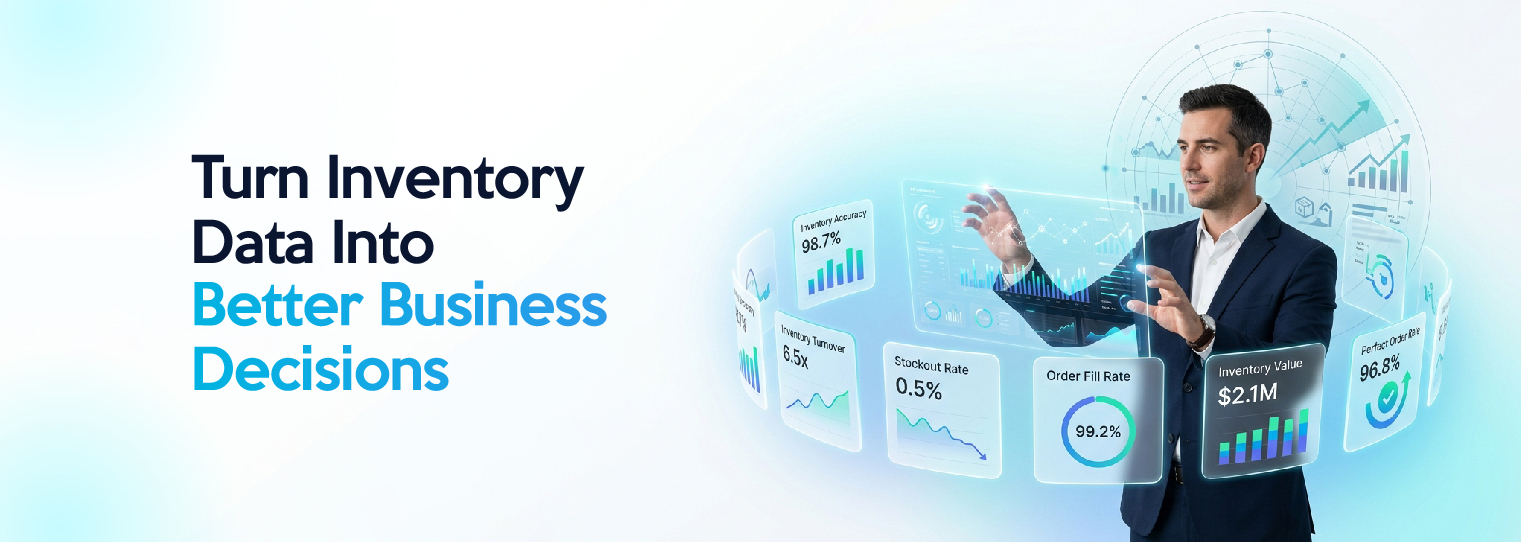
Inventory KPIs help businesses measure performance, identify inefficiencies, and make data-driven decisions that improve operations. Rather than relying on assumptions, organizations can use real metrics to understand what is working and where improvements are needed. The businesses that manage inventory most effectively are often the ones that measure it consistently.
01 · FoundationsWhat are inventory KPIs?
Inventory KPIs are measurable metrics used to evaluate the effectiveness of inventory management processes. These metrics help businesses understand how inventory impacts:
- Operational efficiency
- Inventory accuracy
- Customer satisfaction
- Profitability
- Cash flow
- Supply chain performance
By monitoring inventory KPIs regularly, businesses gain greater visibility into inventory performance and can respond quickly when issues arise.
02 · Why it mattersWhy inventory KPIs matter
Inventory is often one of the largest business assets. Poor inventory performance can result in:
- Excess carrying costs
- Stockouts
- Lost sales
- Fulfillment delays
- Reduced profitability
Inventory KPIs help businesses identify these issues before they become major operational challenges. What gets measured gets improved.
03 · KPI #1Inventory accuracy
Inventory accuracy measures how closely recorded inventory matches actual physical inventory.
Why it matters
Inventory accuracy influences nearly every inventory-related decision. Poor inventory accuracy often leads to:
- Stock discrepancies
- Fulfillment errors
- Purchasing mistakes
- Inventory shortages
Formula
Inventory Accuracy (%) = (Accurate Inventory Records ÷ Total Inventory Records) × 100
What good performance looks like
Many businesses aim for inventory accuracy levels above 95%. High-performing warehouse operations often achieve accuracy rates exceeding 98%. Inventory accuracy is often considered the foundation of effective inventory management.
04 · KPI #2Inventory turnover ratio
Inventory turnover measures how frequently inventory is sold and replenished over a specific period.
Why it matters
Inventory turnover helps businesses understand how efficiently inventory is moving. A higher turnover rate may indicate:
- Strong demand
- Efficient inventory management
- Healthy stock levels
A lower turnover rate may indicate:
- Excess inventory
- Slow-moving products
- Inefficient purchasing
Formula
Inventory Turnover = Cost of Goods Sold ÷ Average Inventory Value
Benefits
- Improved cash flow visibility
- Better inventory planning
- Reduced carrying costs
Inventory turnover is one of the most widely used inventory KPIs across industries.
05 · KPI #3Stockout rate
Stockout rate measures how often products become unavailable when customers want to purchase them.
Why it matters
Stockouts directly affect:
- Revenue
- Customer satisfaction
- Brand reputation
Frequent stockouts may indicate:
- Poor forecasting
- Inefficient replenishment
- Inventory visibility issues
Formula
Stockout Rate (%) = (Number of Stockout Events ÷ Total Product Orders) × 100
Business impact
Reducing stockouts helps improve customer retention while protecting sales opportunities. Customers cannot buy products that are unavailable.
06 · KPI #4Order fill rate
Order fill rate measures the percentage of customer orders fulfilled completely from available inventory.
Why it matters
A strong fill rate indicates inventory is available when needed. A low fill rate may suggest:
- Inventory shortages
- Poor demand planning
- Allocation issues
Formula
Order Fill Rate (%) = (Orders Fulfilled Completely ÷ Total Orders) × 100
Benefits
- Improved customer satisfaction
- Faster fulfillment
- Better inventory planning
Businesses with high fill rates often provide more consistent customer experiences.
07 · KPI #5Carrying cost of inventory
Carrying cost measures the total cost of holding inventory over time.
Why it matters
Inventory does not simply occupy warehouse space. It also creates costs such as:
- Storage expenses
- Insurance costs
- Obsolescence risks
- Capital investment
Components of carrying cost
- Warehouse costs
- Inventory financing
- Handling expenses
- Depreciation
Benefits of monitoring
Tracking carrying costs helps businesses optimize inventory levels and improve profitability. Excess inventory often creates hidden costs that reduce overall business performance.
08 · KPI #6Days inventory outstanding (DIO)
Days Inventory Outstanding measures how long inventory remains in stock before being sold.
Why it matters
DIO provides insight into inventory movement and demand efficiency.
Formula
DIO = (Average Inventory ÷ Cost of Goods Sold) × Number of Days
What it reveals
Higher DIO values may indicate:
- Slow-moving inventory
- Overstocking
- Demand forecasting challenges
Lower DIO values generally indicate faster inventory movement.
09 · KPI #7Inventory shrinkage
Inventory shrinkage measures inventory losses that occur due to factors such as:
- Theft
- Damage
- Misplacement
- Administrative errors
Why it matters
Shrinkage directly affects profitability and inventory accuracy.
Formula
Inventory Shrinkage (%) = ((Recorded Inventory − Actual Inventory) ÷ Recorded Inventory) × 100
Benefits of monitoring
Tracking shrinkage helps businesses identify operational weaknesses and improve inventory controls. Even small inventory losses can accumulate into significant financial impacts over time.
10 · KPI #8Backorder rate
Backorder rate measures the percentage of orders delayed because inventory was unavailable at the time of purchase.
Why it matters
Frequent backorders may indicate:
- Poor inventory planning
- Forecasting issues
- Supplier delays
Benefits
Reducing backorders helps improve:
- Customer satisfaction
- Fulfillment performance
- Inventory reliability
Business impact
Customers increasingly expect fast and predictable order fulfillment.
11 · KPI #9Inventory value
Inventory value represents the total financial value of inventory currently held by the business.
Why it matters
Inventory often represents a significant investment. Monitoring inventory value helps businesses:
- Manage working capital
- Improve purchasing decisions
- Support financial planning
Key considerations
Inventory value should be reviewed regularly to identify:
- Excess inventory
- Obsolete inventory
- Slow-moving products
Financial visibility
Inventory value influences profitability, cash flow, and business performance.
12 · KPI #10Perfect order rate
Perfect order rate measures the percentage of orders delivered without errors. This includes:
- Correct products
- Accurate quantities
- On-time delivery
- Proper documentation
Why it matters
Perfect order rate reflects overall operational performance.
Benefits
- Improved customer satisfaction
- Reduced returns
- Better fulfillment efficiency
Formula
Perfect Order Rate (%) = Perfect Orders ÷ Total Orders × 100
A strong perfect order rate often indicates healthy inventory and fulfillment processes.
13 · TechnologyHow technology improves inventory KPI performance
Tracking KPIs manually becomes increasingly difficult as businesses grow. Technology helps automate measurement and reporting.
Inventory management software
Inventory software provides visibility into:
- Inventory levels
- Stock movement
- Inventory accuracy
- Replenishment needs
Warehouse management systems
Warehouse systems improve:
- Inventory tracking
- Picking accuracy
- Inventory visibility
- Operational reporting
ERP integration
ERP systems connect inventory data with:
- Purchasing
- Finance
- Sales
- Operations
This creates more comprehensive performance reporting.
Real-time dashboards
Modern reporting tools provide immediate access to KPI performance, helping leaders make faster decisions. Visibility improves when inventory information is available in real time.
14 · PitfallsCommon KPI tracking mistakes
Many businesses collect inventory data but fail to use it effectively. Common mistakes include:
Tracking too many metrics
Focus on KPIs that directly support business goals.
Ignoring trends
KPIs should be analyzed over time rather than viewed as isolated numbers.
Delayed reporting
Outdated KPI information limits decision-making effectiveness.
Failing to act on insights
KPIs create value only when they drive operational improvements. Successful businesses use KPIs to guide action, not just generate reports.
15 · FAQFrequently asked questions
What are inventory KPIs?
Inventory KPIs are performance metrics used to measure inventory efficiency, accuracy, and operational effectiveness.
Why are inventory KPIs important?
They help businesses improve inventory control, reduce costs, optimize stock levels, and improve decision-making.
What is the most important inventory KPI?
Inventory accuracy is often considered one of the most important KPIs because it affects nearly every inventory-related process.
How often should inventory KPIs be reviewed?
Most businesses review key inventory KPIs weekly or monthly, depending on operational complexity.
Can inventory software track KPIs automatically?
Yes. Modern inventory management systems can automatically calculate and report inventory KPIs.
What KPI helps reduce stockouts?
Stockout rate, order fill rate, and inventory turnover are commonly used to monitor and reduce stock shortages.
16 · ConclusionMeasure inventory to manage it
Inventory management is most effective when it is measurable. Without clear performance indicators, businesses often struggle to identify inefficiencies, optimize stock levels, and improve operational performance.
Inventory KPIs provide the visibility needed to make informed decisions about inventory, purchasing, fulfillment, and overall business operations.
By consistently tracking metrics such as inventory accuracy, inventory turnover, stockout rate, carrying costs, and order fill rate, organizations can strengthen inventory control while supporting growth and profitability.
The most successful businesses do not simply manage inventory. They measure inventory performance continuously and use data to improve it.
Connect inventory, warehousing, purchasing, fulfillment, and reporting through one centralized platform.
Track inventory KPIs in real time and gain greater operational visibility with Zeper Go.